Quick start
- Enter the clock time when the shift started.
- Enter the clock time when the shift ended. If the shift crosses midnight, use the next-day end time you mean.
- Enter only unpaid break minutes. Leave paid breaks out because they still count as worked time.
- Add an hourly rate only when you want a quick gross pay estimate before taxes, deductions, overtime, or premiums.
Best uses
Start here if one of these sounds like your job. The examples below show which inputs matter most.
- Calculate hours worked from start time, end time, and break minutes.
- Convert a shift into decimal hours for invoices or timesheets.
- Estimate gross pay from an hourly rate.
- Handle overnight shifts where the end time is after midnight.
What this calculator is solving
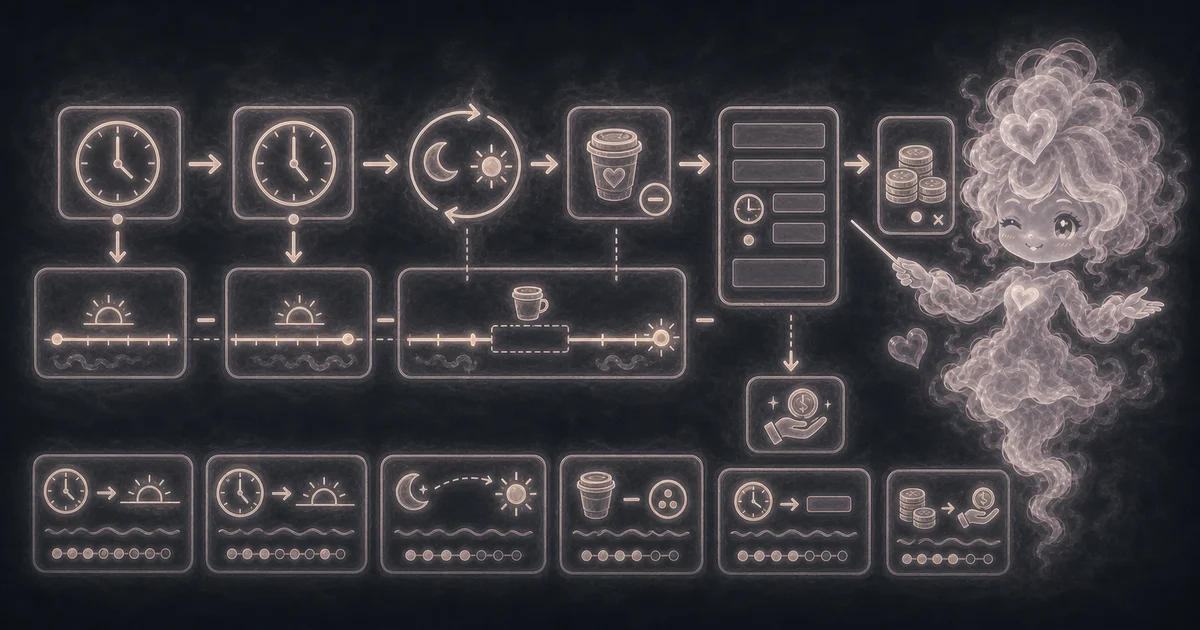
The Hours Calculator turns a start time, end time, and unpaid break into the hours you worked. It shows the answer as decimal hours for time sheets, hours and minutes for easy reading, and a simple gross pay estimate when you add an hourly rate.
Match each input label on the calculator to the start clock time, end clock time, unpaid break minutes, and optional hourly rate.
The formula in plain language
In plain language: The calculator converts the start and end clock times into seconds after midnight. If the end time is earlier than the start time, it adds 24 hours for an overnight shift. Then it subtracts break minutes, divides worked seconds by 3,600 for decimal hours, and multiplies by hourly rate when one is entered. The examples on the page are there so you can compare your inputs with a shift example before copying the answer.
For 9:00 AM to 5:30 PM with a 30 minute break, the calculator counts 8.5 hours from start to end, subtracts 0.5 hours, and returns 8.0 decimal hours. If you add $25/hour, gross pay is $200.00.
How to read the answer
Read decimal hours when a payroll form, invoice, or spreadsheet needs one number. Read the hours-and-minutes line when you want the everyday version of the same duration.
- Decimal hours is the value usually used on time sheets. For example, 7 hours 30 minutes becomes 7.5 hours.
- Hours and minutes gives a more readable duration so you can sanity-check the result.
- Gross pay multiplies decimal hours by the hourly rate you entered. It is a simple estimate, not a final paycheck.
- If the end time is earlier than the start time, the calculator treats it as an overnight shift and counts through midnight.
Common mistakes to avoid
The biggest mistakes are small input mistakes: mixing up AM and PM, entering paid breaks as unpaid breaks, or forgetting that an overnight end time is on the next day. Official payroll rounding, overtime, and break rules still need the policy that applies to you.
- Do not treat the result as payroll advice or a legal wage calculation.
- Check employer rounding, overtime, split-shift, holiday, travel, and break rules separately.
- Do not subtract paid breaks. Only subtract break time that should not count as work time.
- Watch AM and PM. 8:00 AM to 4:30 PM is a normal day shift; 8:00 PM to 4:30 AM is overnight.
- If a shift spans time zones, daylight saving changes, or manual clock edits, confirm the official timekeeping record.
Worked shift examples to compare
Use these examples to check whether your own result feels right before you copy it into a time sheet, invoice, or notes app.
- Day shift: 9:00 AM to 5:30 PM with a 30 minute break spans 8.5 hours, subtracts 0.5 hours, and returns 8.0 hours.
- No break: 8:15 AM to 4:00 PM returns 7.75 hours, which is 7 hours 45 minutes.
- Overnight: 10:00 PM to 6:30 AM with a 45 minute break returns 7.75 hours.
- With pay: 1:20 PM to 6:50 PM with a 15 minute break returns 5.25 hours; at $18/hour, gross pay is $94.50.
When this guide is not enough
Use this guide for clean time math. Use your employer policy, contract, payroll system, or local labor rules for decisions about rounding, overtime, unpaid breaks, paid breaks, shift premiums, and final pay.
If you are checking a whole week of shifts, a time-card workflow may be easier than one shift at a time. If you are turning pay into yearly or monthly income, use a salary tool after you know the hourly amount is right.
Research and references
These references help check the measurements, units, limits, or safety notes used in this guide.
Worked examples for Hours Calculator
8 hours
7.75 hours
7.75 hours
5.25 hours and $94.50
FAQ in plain language
When should I use the Hours Calculator?
Use it when your task matches one of these common needs: Calculate hours worked from start time, end time, and break minutes. Convert a shift into decimal hours for invoices or timesheets. It works best when you already know the start clock time, end clock time, unpaid break minutes, and optional hourly rate.
What is the Hours Calculator doing with my inputs?
In plain language: The calculator converts the start and end clock times into seconds after midnight. If the end time is earlier than the start time, it adds 24 hours for an overnight shift. Then it subtracts break minutes, divides worked seconds by 3,600 for decimal hours, and multiplies by hourly rate when one is entered. The examples on the page are there so you can compare your inputs with a shift example before copying the answer.
What do the main Hours Calculator inputs mean?
Start time: the clock time the shift begins, such as 09:00 or 10:00 PM. End time: the clock time the shift ends. If it is earlier than the start time, the calculator treats it as next day. Break minutes: unpaid break time to subtract from the shift, entered as total minutes. Hourly rate: an optional pay rate used only for a simple gross pay estimate.
How should I read the Hours Calculator answer?
Read the headline answer, then check the supporting lines and examples to understand how the calculator got there. If one input changes, rerun the tool and compare the new answer instead of guessing.
What should I double-check before trusting the answer?
This is simple time-card math, not payroll, legal, tax, or HR advice. Rounding rules, overtime, split shifts, paid breaks, local labor rules, and employer policies can change official paid hours. Also check AM/PM, whether the shift crosses midnight, whether the break is unpaid, and whether your employer rounds time before payroll.
How do I calculate hours worked from start and end time?
Count the time from the start clock time to the end clock time, subtract unpaid break minutes, then convert the result to decimal hours. For 9:00 AM to 5:30 PM with a 30 minute break, the shift span is 8.5 hours and the worked time is 8.0 hours.
Does the Hours Calculator handle overnight shifts?
Yes. If the end time is earlier than the start time, the calculator treats the end time as the next day. A 10:00 PM to 6:30 AM shift is 8.5 hours before breaks, not a negative duration.
Related tools
- Time CalculatorAdd or subtract hours, minutes, and seconds with normalized H:M:S, total seconds, and decimal hours.
- Date CalculatorAdd or subtract days from a date, or count full days between two dates.
- Salary CalculatorConvert annual salary to monthly, biweekly, weekly, daily, and hourly pay.
Keep exploring
If this guide is close but not exact, these links keep you near the same kind of problem.
- Date & TimeBrowse the full category for related tools that help with the same job.
- All free toolsSearch the complete Access Free Tools library by task, category, or tool name.
- All calculator and utility guidesFind more plain-language examples, formulas, mistakes, and result explanations.
- Free calculator resourcesStart here when you are not sure which calculator page fits.
Privacy and copying results
Recent answers stay visible only while you work in the current browser tab. They are not sent to a server.
Use Copy answer when you want to save the inputs and result in notes, homework, a message, or a project list. Check the units, labels, and limits before copying.