Quick start
- Enter the recipe amount needed and its unit.
- Enter the package amount, package unit, and package price.
- Use density grams per cup when the recipe and package cross between volume and weight.
Best uses
Start here if one of these sounds like your job. The examples below show which inputs matter most.
- Estimate how much flour, sugar, butter, or chocolate costs in a recipe.
- Compare homemade cost with store-bought food.
- Build a simple bake sale or meal prep cost sheet.
- Convert package units before calculating cost.
What this calculator is solving
The Ingredient Cost Calculator is useful when you want to know how much one ingredient contributes to a recipe cost. It can convert package units into recipe units first, then price only the amount you use.
Match each input label on the calculator to the amount used in the recipe, the recipe unit, the package amount and unit from the label, the package price, and density grams per cup when the recipe crosses between volume and weight.
The formula in plain language
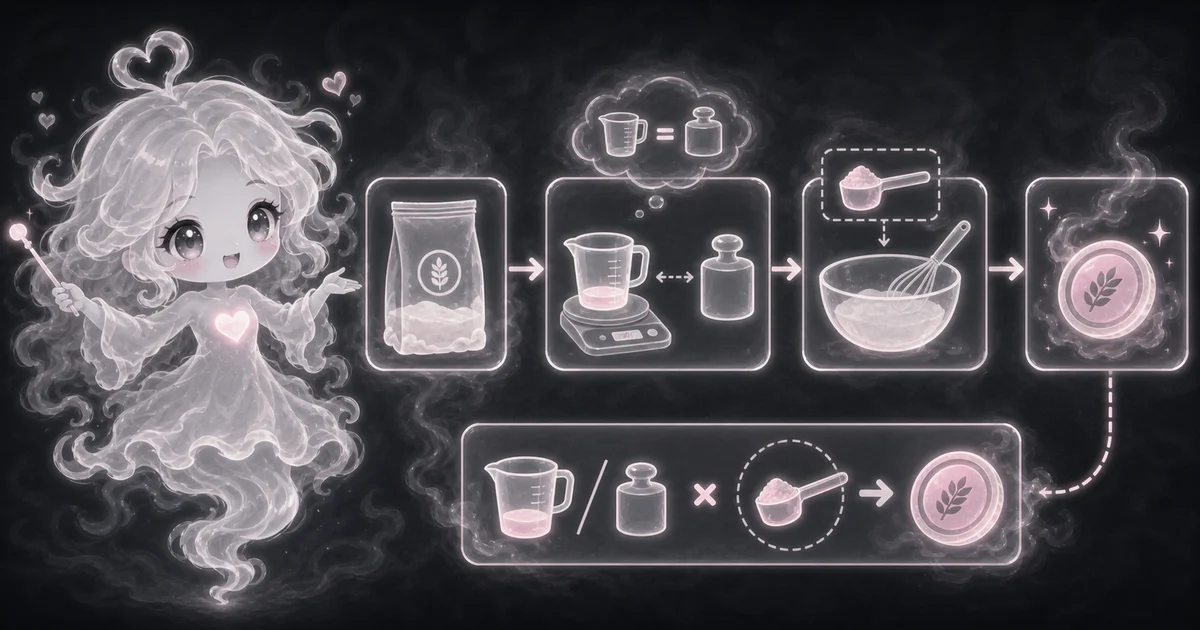
In plain language: First convert the package amount into the recipe unit. Unit cost = package price / package amount in the needed unit. Ingredient cost = amount needed x unit cost. If the package and recipe cross between volume and weight, the conversion uses density grams per cup before pricing the amount used. The examples on the page are there so you can compare your inputs with a worked example before copying the answer.
Check package amount converted first, especially when the label uses pounds or ounces but the recipe uses cups, tablespoons, or milliliters. If that converted package amount looks wrong, fix the unit or density before using the cost result.
How to read the answer
Read the ingredient cost as the cost of the amount used, not the cost of the whole package. Then check the converted package amount and unit cost so you can spot a unit mismatch before you trust the estimate.
- The main answer is the estimated cost of the amount used in the recipe.
- Unit cost shows the price per recipe unit after package conversion.
- Package amount converted shows how large the package is in the unit your recipe uses.
Common mistakes to avoid
Most wrong ingredient-cost answers come from one of three things: the package size was copied in the wrong unit, the recipe amount was rounded too much, or a volume-to-weight estimate used the wrong density.
- Do not forget tax, coupons, spoiled food, or waste if you want real spending cost.
- Do not mix volume and weight without checking ingredient density.
- Do not assume leftovers have no value if you will use them later.
Example: flour from a 5 lb bag
Say the recipe needs 2 cups of flour, the bag is 5 lb, the bag costs $4.49, and you use 120 grams per cup. The calculator converts the 5 lb bag into about 18.8997 cups, then prices 2 cups from that package.
The result is about $0.47514 for the flour in the recipe. That does not mean the bag costs 48 cents. It means this recipe used roughly 48 cents of that bag.
Example: chocolate chips and milk
For chocolate chips, 170 g from a 12 oz bag at $3.99 costs about $1.99. This is a weight-to-weight conversion, so density is not needed.
For milk, 250 mL from a 1 gallon jug at $4.20 costs about $0.277381. This is volume-to-volume, so the result depends on the gallon-to-milliliter conversion and the price you entered, not on ingredient density.
How to build a whole recipe cost
This guide prices one ingredient at a time on purpose. Run flour, sugar, butter, milk, chocolate, spices, and any other ingredient separately, then add the ingredient costs together for the recipe total.
After that, divide by servings if you want a serving estimate. The Cost Per Serving Calculator is the cleaner place to do that second step because it keeps the batch cost and serving count visible.
When this is not enough for menu pricing
Ingredient cost is only one part of menu or product pricing. A restaurant, bakery, or seller also has waste, trim loss, packaging, labor, rent, utilities, delivery fees, payment fees, taxes, and profit targets.
Use the calculator for the ingredient math, then add the business costs separately before setting a public price. If you only multiply ingredient cost by a simple markup, the number can look neat while still missing the real cost of selling the food.
Research and references
These references help check unit conversions, ingredient-density context, and the people-first source standards used in this guide.
Worked examples for Ingredient Cost Calculator
About $0.47514
About $1.99
About $0.277381
$0.57
FAQ in plain language
When should I use the Ingredient Cost Calculator?
Use it when your task matches one of these common needs: Estimate how much flour, sugar, butter, or chocolate costs in a recipe. Compare homemade cost with store-bought food. It works best when you already know the measurements, amounts, units, or options the page asks for.
What is the Ingredient Cost Calculator doing with my inputs?
In plain language: First convert the package amount into the recipe unit. Unit cost = package price / package amount in the needed unit. Ingredient cost = amount needed x unit cost. If the package and recipe cross between volume and weight, the conversion uses density grams per cup before pricing the amount used. The examples on the page are there so you can compare your inputs with a worked example before copying the answer.
What do the main Ingredient Cost Calculator inputs mean?
Amount needed: How much of the ingredient your recipe uses, such as 2 cups, 170 g, or 250 mL. Needed unit: The unit used by the recipe amount. Package amount: How much ingredient is in the package you bought, such as 5 lb, 12 oz, 2 kg, or 1 gallon. Package unit: The unit printed on the package or receipt. Package price: The shelf price, sale price, or adjusted price you want the estimate to use. Density grams per cup: Used only when converting between volume and weight units, such as cups of flour from a pound bag.
How should I read the Ingredient Cost Calculator answer?
Read the headline answer, then check the smaller lines beside it. For everyday tools, those lines usually show the distance, time, cost, units, or setting that made the answer change.
What should I double-check before trusting the answer?
The estimate is only as accurate as the package price, unit conversion, density, and recipe amount you enter. It does not include tax, spoilage, coupons, trim waste, evaporation, packaging, labor, overhead, delivery fees, or leftover value unless you include those costs yourself. Also check the unit, scale, mode, and result limit because small input changes can change the answer.
How does the calculator find ingredient cost?
It converts the package size into the same unit as the recipe amount, divides the package price by that converted package size, then multiplies by the amount the recipe needs.
What does package amount converted mean?
It is the package size rewritten in the recipe unit. For example, a 5 lb flour bag is about 18.8997 cups when using 120 grams per cup, so the calculator can price 2 cups from that bag.
Related tools
- Cooking Measurement ConverterConvert recipe units, including approximate volume-to-weight conversions with ingredient density.
- Recipe ScalerScale one recipe ingredient from original servings to the servings you want to make.
- Cost Per Serving CalculatorSplit a recipe, meal prep, or food batch cost across the number of servings.
- Unit Price CalculatorCompare two products by price per shared unit so the cheaper package is clearer.
Keep exploring
If this guide is close but not exact, these links keep you near the same kind of problem.
- Everyday ToolsBrowse the full category for related tools that help with the same job.
- All free toolsSearch the complete Access Free Tools library by task, category, or tool name.
- All calculator and utility guidesFind more plain-language examples, formulas, mistakes, and result explanations.
- Free calculator resourcesStart here when you are not sure which calculator page fits.
Privacy and copying results
Recent answers stay visible only while you work in the current browser tab. They are not sent to a server.
Use Copy answer when you want to save the inputs and result in notes, homework, a message, or a project list. Check the units, labels, and limits before copying.