Quick start
- Open the Pace Calculator.
- Enter the total distance and choose miles or kilometers.
- Use the first example, "5K run: 5 km in 25:00", if you want to see a filled-out calculation before entering your own values.
- Calculate, read the formula line, then copy the result only after the units and assumptions look right.
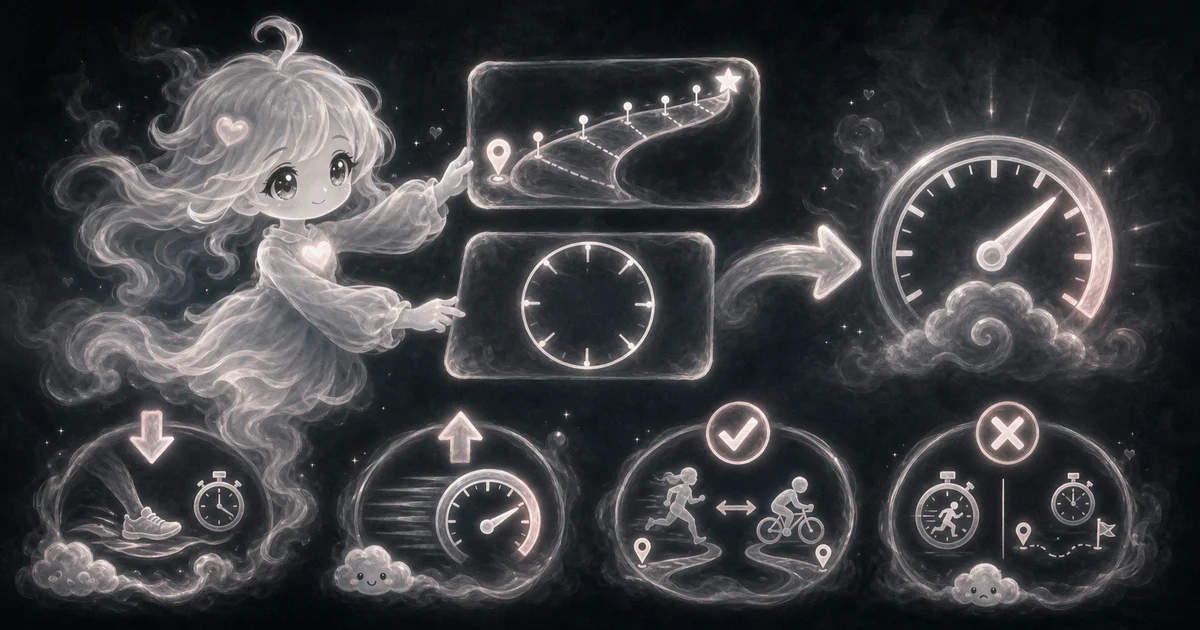
Best uses
Start here if one of these sounds like your job. The examples below show which inputs matter most.
- Find pace per kilometer after a run or walk.
- Find pace per mile for race planning.
- Convert a workout time into speed per hour.
- Compare training sessions only when the distance unit and time type match.
What this calculator is for
The Pace Calculator turns a distance and elapsed time into pace per mile or kilometer, plus speed per hour. It is useful for running, walking, cycling, race goals, and comparing training logs without doing time math by hand.
Use it when you want to: Find pace per kilometer after a run or walk. Find pace per mile for race planning.
What to enter
Good answers start with clean inputs. Before calculating, check the labels, units, and dates so the tool is solving the same problem you actually have.
- Enter the total distance and choose miles or kilometers.
- Enter the full elapsed time, including hours, minutes, and seconds. For races, use total elapsed time; for a private workout log, use moving time only if you mean to exclude stops.
- Use the same distance unit and the same time type when comparing workouts.
Example walkthrough
Try the calculator example: 5K run: 5 km in 25:00. The example result is 5:00 per km; 12.00 km/h.
- For 5 km in 25:00, the calculator divides 25 minutes by 5.
- The result is 5:00 per kilometer, and speed is 12.00 km/h.
- For 10 km in 55:30, the pace is 5:33 per kilometer and the speed is 10.81 km/h.
- For 3 miles in 30:00, the pace is 10:00 per mile and the speed is 6.00 mi/h.
- For a 4:00:00 marathon over 42.195 km, the pace is about 5:41 per kilometer and the speed is 10.55 km/h.
Formula and steps
In plain language: Pace = total elapsed seconds divided by distance. Speed = distance divided by total time in hours. The pace display rounds to the nearest second per selected distance unit. Read the result together with the notes on the page, because health and fitness numbers often need personal context.
Read the formula note when you need to understand where the number came from, especially before comparing results over time.
How to read the answer
Read the main estimate first, then read the note beside it. For health, pregnancy, nutrition, kidney, alcohol, or training decisions with real consequences, use qualified professional guidance.
- Lower pace means faster because it is time per distance.
- Higher speed means faster because it is distance per hour.
- A pace like 5:00 per km is not the same as 5:00 per mile. Check the selected distance unit before comparing results.
- The displayed pace is rounded to the nearest second per unit, so tiny decimal differences are normal.
Common mistakes to avoid
Most bad results come from a small input mistake or from using a rough estimate for a decision it cannot safely answer.
- Do not mix moving time and total elapsed time when comparing sessions.
- Do not compare mile pace with kilometer pace without converting.
- Do not use pace alone to judge effort on hills, heat, or trails.
- Do not use this as medical advice or as a push to train harder than your current health, recovery, or experience can support.
What to try next
A related health tool can help check the same topic from another angle, but one number should not replace proper care.
- Use Calories Burned Calculator to estimate workout energy.
- Use Target Heart Rate Calculator to compare effort zones.
- Use BMR Calculator when you need resting energy context instead of workout pace.
Sources and safety notes
This guide uses public-health, clinical, or peer-reviewed references where the calculator needs a specific formula or interpretation boundary.
Source links are provided for transparency, but they do not turn the calculator into medical advice or a replacement for professional care.
Worked examples for Pace Calculator
5:00 per km; 12.00 km/h
5:33 per km; 10.81 km/h
10:00 per mile; 6.00 mi/h
5:41 per km; 10.55 km/h
FAQ in plain language
When should I use the Pace Calculator?
Use it for simple educational checks, trend tracking, or planning tasks like these: Find pace per kilometer after a run or walk. Find pace per mile for race planning. It can help you understand a number, but it cannot explain your whole health situation.
What do the main Pace Calculator inputs mean?
Enter the body, activity, date, or lab values exactly in the units shown on the page. Height, weight, age, sex, time, and activity level can change health estimates a lot, so treat each label like a rule instead of a suggestion. If you are unsure which option fits, choose the closest honest match and read the result as a rough estimate.
What is the Pace Calculator doing with my inputs?
In plain language: Pace = total elapsed seconds divided by distance. Speed = distance divided by total time in hours. The pace display rounds to the nearest second per selected distance unit. Read the result together with the notes on the page, because health and fitness numbers often need personal context.
How should I read the Pace Calculator result?
Use the result as a learning number, not a final answer about your body or health. The supporting lines can show categories, ranges, calories, dates, or targets, but those numbers still need context like age, medical history, pregnancy status, training level, and advice from a qualified professional.
What is the difference between pace and speed?
Pace is time per distance, such as 5:00 per kilometer, so a lower pace is faster. Speed is distance per hour, such as 12.00 km/h, so a higher speed is faster.
Should I enter moving time or total elapsed time?
Use total elapsed time for races, official comparisons, and anything where stops count. Use moving time only when you intentionally want to remove pauses, and do not compare it with elapsed-time results.
Why can pace look slightly rounded?
The calculator divides total seconds by distance, then rounds the displayed pace to the nearest second per mile or kilometer. Speed keeps more decimal detail so the two outputs can look slightly different after rounding.
Related tools
- Calories Burned CalculatorEstimate total and active exercise calories from MET, weight, and time.
- Target Heart Rate CalculatorEstimate target heart-rate zones by age or turn a timed pulse count into BPM.
- One Rep Max CalculatorEstimate one-rep max from weight lifted and reps completed.
Keep exploring
If this guide is close but not exact, these links keep you near the same kind of problem.
- Health & FitnessBrowse the full category for related tools that help with the same job.
- All free toolsSearch the complete Access Free Tools library by task, category, or tool name.
- All calculator and utility guidesFind more plain-language examples, formulas, mistakes, and result explanations.
- Free calculator resourcesStart here when you are not sure which calculator page fits.
Privacy and copying results
Recent answers stay visible only while you work in the current browser tab. They are not sent to a server.
Use Copy answer when you want to save the inputs and result in notes, homework, a message, or a project list. Check the units, labels, and limits before copying.