1 in x 6 in x 8 ft x 4
- Board feet each
- 4
- Quantity
- 4
- Formula divisor
- 12
Board feet measure sawn-lumber volume. Actual vs nominal dimensions, grade, species, moisture, waste, and log rules can differ.
Estimate sawn-lumber board feet from thickness in inches, width in inches, length in feet, and quantity, with actual-size and pricing cautions.
Use this for planning. Check measurements, product instructions, and local requirements before buying or building. Read assumptions and limits.
1 in x 6 in x 8 ft x 4
Board feet measure sawn-lumber volume. Actual vs nominal dimensions, grade, species, moisture, waste, and log rules can differ.
Recent board-foot calculations will appear here.
Board-foot math stays local and measures lumber volume only, not strength or log yield.
Inputs and recent answers stay in this browser tab and are not sent to a server.
Estimate lumber volume before visiting a lumber yard.
Compare rough boards with different dimensions.
Multiply one board size by quantity.
Understand board-foot pricing better.
Check whether a slab or hardwood board listing is in the right range.
16 board feet
40 board feet
21 board feet
Need a slower walkthrough, a related calculator, or the full library? These links keep you close to the task you started.
Plain-language answers about when to use the tool, what it does with your inputs, what to double-check, and how privacy works.
Use it when your task matches one of these common needs: Estimate lumber volume before visiting a lumber yard. Compare rough boards with different dimensions. It works best when you already know thickness in inches, width in inches, length in feet, and quantity.
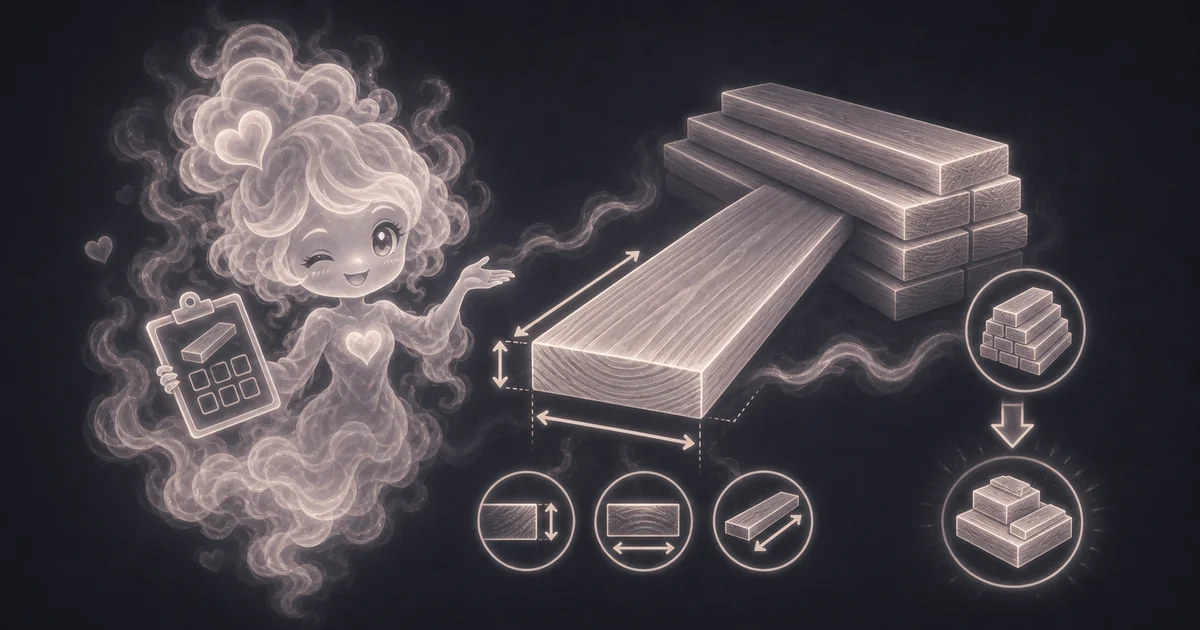
In plain language: Board feet each = thickness inches x width inches x length feet / 12. Total board feet = board feet each x quantity. The examples on the page are there so you can compare your inputs with a 1 x 6 lumber example before copying the answer.
Thickness: board thickness in inches, such as 1, 1.5, 2, or a rough-lumber value like 4/4 when converted to inches. Width: board width in inches. Use the measured width when the board is rough, live edge, or not a simple store label. Length: board length in feet. An 8-foot board is entered as 8, not 96. Quantity: how many boards with that same thickness, width, and length to include. Board feet each: the lumber volume for one board before multiplying by quantity. Total board feet: the combined lumber volume to compare with board-foot pricing.
Read the headline estimate first, then check the material, waste, coverage, and unit lines. For project tools, the supporting lines are often the difference between a rough idea and a list you can actually shop from.
Board feet measure sawn-lumber volume only. Actual vs nominal dimensions, surfaced thickness, seller rules, moisture, defects, species, grade, waste, and log rules can change real buying needs. Check whether the seller prices by rough, surfaced, nominal, or actual size. Also leave waste for defects, milling, knots, and bad cuts.
Thickness and width are entered in inches, but length is entered in feet. Dividing by 12 converts that mixed-unit volume into board feet.
Use the size your seller uses for board-foot pricing. Rough lumber, surfaced lumber, and home-center labels can be different, so ask before comparing prices.
One board is 1 x 6 x 8 / 12 = 4 board feet. Four matching boards are 16 board feet total.
No. Linear foot only measures length. Board foot measures lumber volume, so thickness and width change the answer.
Not by itself. Logs need a local log rule such as Doyle, Scribner, or International 1/4-inch, plus allowances for taper, saw kerf, slabs, shrinkage, and defects.
Usually, yes. Board feet measure volume, not usable finished parts. Add waste for knots, cracks, milling, mistakes, matching grain, and offcuts.
No. The board-foot estimate runs in your browser tab. Your lumber dimensions, quantity, price checks, and recent answers are not sent to a server.