H2O
- Atoms counted
- 3
- Elements
- H, O
- Largest mass share
- O
Composition: H 2 (11.190674438%), O 1 (88.809325562%)
Use this free molecular weight calculator to parse common chemical formulas and calculate molar mass in grams per mole.
H2O
Composition: H 2 (11.190674438%), O 1 (88.809325562%)
Recent formula weights will appear here.
Formula parsing happens locally. Atomic weights are rounded reference values.
Inputs and recent answers stay in this browser tab and are not sent to a server.
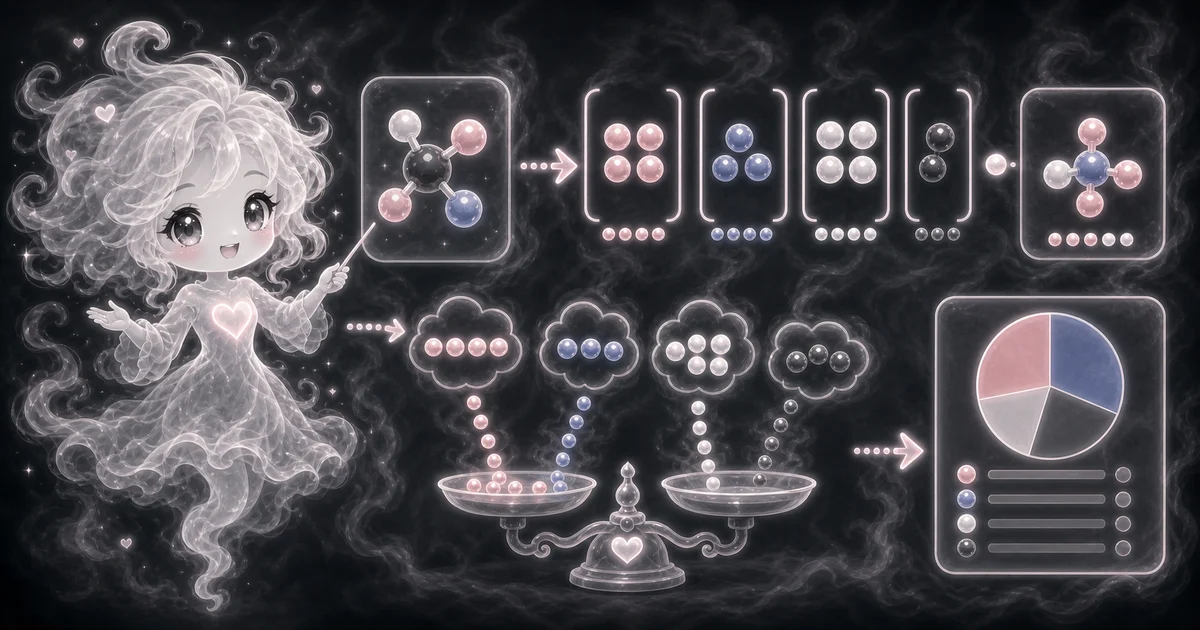
Find molar mass for common formulas.
Check element counts in parentheses.
Estimate mass percentage by element.
Use the result in the Molarity Calculator.
About 18.015 g/mol: two H atoms plus one O atom
About 180.156 g/mol for the full formula unit
About 74.092 g/mol, with the OH group counted twice
Hydrate waters included in the total molar mass
Need a slower walkthrough, a related calculator, or the full library? These links keep you close to the task you started.
Plain-language answers about when to use the tool, what it does with your inputs, what to double-check, and how privacy works.
Use it when your task matches one of these common needs: Find molar mass for common formulas. Check element counts in parentheses. It works best when you already know the measurements, amounts, units, or options the page asks for.
In plain language: The calculator parses element symbols, subscripts, parentheses, and dot hydrate parts, then adds each element count times its rounded atomic weight. For H2O, it adds two hydrogen atoms and one oxygen atom for about 18.015 g/mol. The examples on the page are there so you can compare your inputs with a worked example before copying the answer.
Chemical formula: element symbols and counts, such as H2O, C6H12O6, Ca(OH)2, or CuSO4.5H2O. Subscripts: the numbers after element symbols or parentheses that multiply atom counts. Dot hydrates: formula parts separated by a period, where a leading number multiplies the following hydrate group. Mass share: the percentage of the total molar mass contributed by each element.
Read the headline answer, then check the supporting lines and examples to understand how the calculator got there. If one input changes, rerun the tool and compare the new answer instead of guessing.
The atomic-weight table is rounded and supports common classroom elements. Isotopes, charges, exact masses, structural formulas, and unsupported elements need reference data. Also check the unit, scale, mode, and result limit because small input changes can change the answer.
Element symbols use one capital letter and sometimes one lowercase letter. CO means carbon and oxygen, but Co means cobalt. The calculator reads capitalization as part of the chemistry symbol.
For classroom formula work, people often use the terms together. The calculator returns grams per mole, so the result is the molar mass you can use in stoichiometry or in the Molarity Calculator.
A number after parentheses multiplies everything inside the group. Ca(OH)2 counts one calcium, two oxygens, and two hydrogens before the atomic weights are added.
Yes. Use a period between the main formula and hydrate part. The leading 5 multiplies the H2O group, so the calculator includes five waters of hydration in the total.
No. The calculator runs in your browser tab. Your recent answers stay only on the page while you use it, and they are not sent to a server.