Quick start
- Enter the oven setting from the recipe, such as 350 F, 180 C, or gas mark 6.
- Choose whether the recipe uses Fahrenheit, Celsius, or gas mark.
- Run the converter before preheating so you can set the oven once instead of guessing.
Best uses
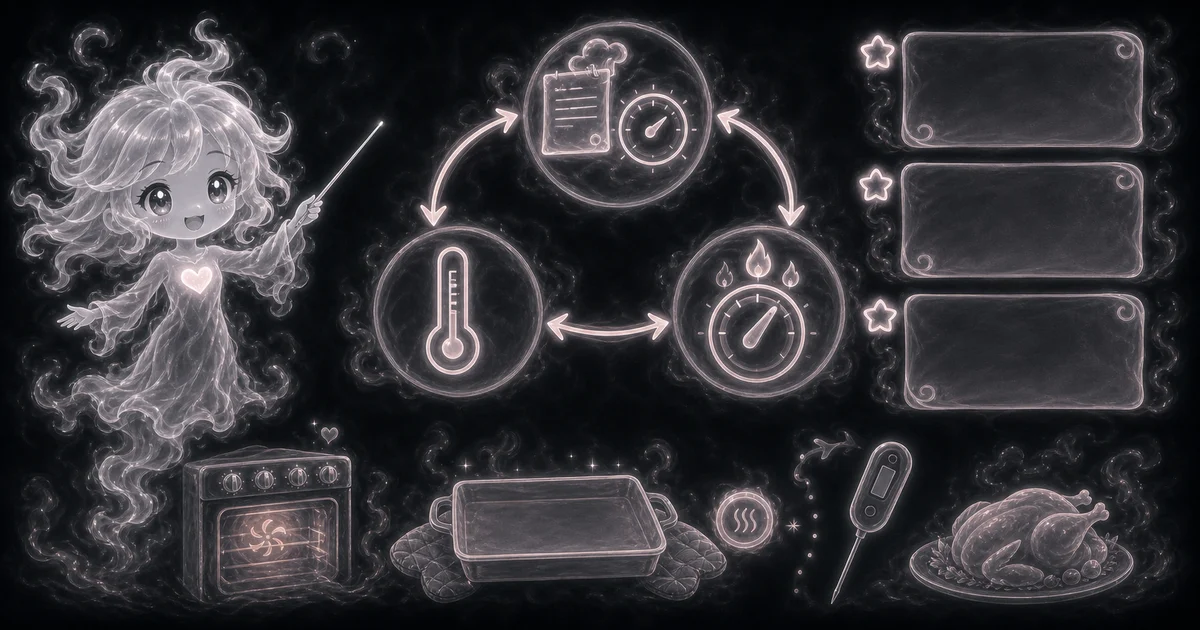
Start here if one of these sounds like your job. The examples below show which inputs matter most.
- Use a Celsius recipe in a Fahrenheit oven.
- Convert a gas mark recipe to Fahrenheit or Celsius.
- Estimate a fan-oven starting point for a conventional recipe.
- Check a baking temperature before preheating.
What this converter helps with
The Oven Temperature Converter helps when a recipe uses a different oven setting than your oven. It converts Fahrenheit and Celsius, shows the nearest common gas mark, and gives a rough fan-oven starting point.
Match each input label on the converter to the text, format, mode, option, or platform rule you actually need.
The logic in plain language
In plain language: The converter uses F = C x 9 / 5 + 32 and C = (F - 32) x 5 / 9, estimates a fan-oven starting point by lowering the rounded Celsius setting by about 20 C, then finds the nearest common gas mark temperature. The examples on the page are there so you can compare your inputs with a filled-out example before copying the answer.
The example cards on the converter page show a complete input and the kind of answer you should expect.
How to read the answer
Read the main result first. Then check the smaller lines for the totals, units, ranges, counts, or formula steps behind it.
- The main answer shows Fahrenheit and Celsius together.
- Fan oven starting point gives a rough convection setting based on lowering the rounded Celsius setting by about 20 C.
- Nearest gas mark gives the closest common gas setting, not an exact lab value.
- Use the note to remember that oven setting is not the same as food internal temperature.
Common mistakes to avoid
If the answer looks strange, the most likely cause is a small input mismatch: the wrong text, mode, format, line break, privacy choice, or platform rule.
- Do not treat gas mark as a lab-exact temperature.
- Do not assume every fan oven uses the same adjustment. Some ovens auto-convert convection temperatures.
- Do not assume your oven runs perfectly at the dial setting, especially for older ovens or small countertop ovens.
- Do not use oven temperature conversion as a food safety check.
Example: 350 F in a Celsius oven
If a US cookie recipe says 350 F, the formula gives about 177 C. Most oven charts round that to 180 C because ovens are set in simple steps.
The nearest gas mark is 4. For a fan oven, a rough starting point is about 160 C, but the recipe and oven manual should win if they give a different fan setting.
Why fan oven numbers are lower
A fan oven moves hot air around the food, so it often cooks faster than a regular oven at the same dial temperature. That is why many conversion charts lower the Celsius setting by about 20 C for fan cooking.
This is still a starting point, not a safety promise. Dense food, full trays, dark pans, and ovens that run hot or cold can change the real result.
Oven setting is not food safety
The converter only helps with the oven dial. It does not tell you when chicken, leftovers, casseroles, or other foods are safe inside.
Use a food thermometer and trusted food-safety guidance when doneness matters. A recipe can say 400 F and still need an internal-temperature check.
Research and references
These references help check the tool logic, format choices, platform limits, or safety notes.
Worked examples for Oven Temperature Converter
About 177 C, gas mark 4, fan about 160 C
356 F, gas mark 4, fan about 160 C
400 F, about 204 C, fan about 180 C
FAQ in plain language
When should I use the Oven Temperature Converter?
Use it when your task matches one of these common needs: Use a Celsius recipe in a Fahrenheit oven. Convert a gas mark recipe to Fahrenheit or Celsius. It works best when you already know the value, source unit, target unit, format, or mode the page asks for.
What is the Oven Temperature Converter doing with my inputs?
In plain language: The converter uses F = C x 9 / 5 + 32 and C = (F - 32) x 5 / 9, estimates a fan-oven starting point by lowering the rounded Celsius setting by about 20 C, then finds the nearest common gas mark temperature. The examples on the page are there so you can compare your inputs with a filled-out example before copying the answer.
What do the main Oven Temperature Converter inputs mean?
Temperature: the oven setting printed in the recipe, not the cooked food temperature. Unit: whether the recipe uses Fahrenheit, Celsius, or gas mark.
How should I read the Oven Temperature Converter answer?
Read the output next to your original input. If the tool changes format, units, encoding, spacing, or capitalization, compare a small sample before copying the whole result into another app.
What should I double-check before trusting the answer?
Oven settings are approximate. Fan and gas mark charts vary, some ovens auto-convert convection settings, real ovens can run hot or cold, and this does not replace safe internal food temperature checks. Also check the source unit, target unit, format, decimal places, and selected mode because small input changes can change the result.
Is gas mark exact?
No. Gas mark is usually treated as a practical oven setting with common approximate Fahrenheit and Celsius equivalents. Use the nearest mark and watch the food.
What fan oven temperature should I use?
For a conventional-oven recipe, a common fan-oven starting point is about 20 C lower than the rounded Celsius setting. Some US convection ovens instead auto-lower by about 25 F. Check the oven manual and recipe notes before trusting one rule.
Related tools
- Cooking Measurement ConverterConvert recipe units, including approximate volume-to-weight conversions with ingredient density.
- Recipe ScalerScale one recipe ingredient from original servings to the servings you want to make.
- Baking Pan Conversion CalculatorCompare rectangular baking pan areas and estimate how much to scale a recipe.
- Butter ConverterConvert butter between sticks, tablespoons, cups, ounces, grams, teaspoons, and pounds.
Keep exploring
If this guide is close but not exact, these links keep you near the same kind of problem.
- ConvertersBrowse the full category for related tools that help with the same job.
- All free toolsSearch the complete Access Free Tools library by task, category, or tool name.
- All tool and utility guidesFind more plain-language examples, logic notes, mistakes, and result explanations.
- Free tool resourcesStart here when you are not sure which tool page fits.
Privacy and copying results
Recent answers stay visible only while you work in the current browser tab. They are not sent to a server.
Use Copy answer when you want to save the inputs and result in notes, homework, a message, or a project list. Check the units, labels, and limits before copying.