1 yd3 at 1:2:3
- Adjusted concrete
- 1.1 yd3
- Cement
- 4.95 ft3
- Sand
- 9.9 ft3
- Gravel
- 14.85 ft3
Concrete mix design depends on strength, moisture, aggregate size, additives, and code requirements. This is a planning estimate for simple batches.
Use this free concrete mix calculator to estimate cement bags, sand, and gravel from cubic yards, 1:2:3 or 1:2:4 ratio parts, bag yield, and waste percent.
Use this for planning. Check measurements, product instructions, and local requirements before buying or building. Read assumptions and limits.
1 yd3 at 1:2:3
Concrete mix design depends on strength, moisture, aggregate size, additives, and code requirements. This is a planning estimate for simple batches.
Recent concrete mix estimates will appear here.
Concrete mix estimates stay local and use simple ratio math for small-batch planning.
Inputs and recent answers stay in this browser tab and are not sent to a server.
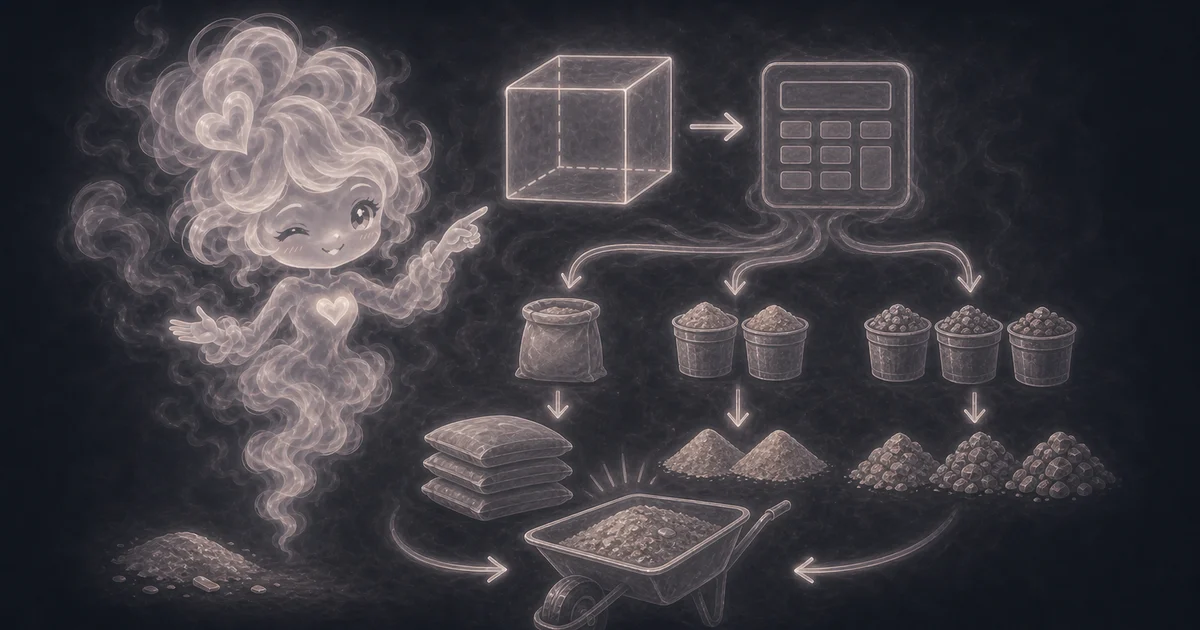
Plan cement, sand, and gravel for small concrete batches.
Compare 1:2:3 and 1:2:4 style ratios.
Add waste before buying bagged materials.
Turn cubic yards into cubic feet, whole cement bags, sand, and gravel.
Check whether a slab batch estimate needs a ready-mix quote instead.
5 cement bags, 9.90 ft3 sand, 14.85 ft3 gravel
2 cement bags, 2.08 ft3 sand, 4.17 ft3 gravel
28.35 ft3 vs 29.70 ft3 adjusted concrete
7 cement bags
Need a slower walkthrough, a related calculator, or the full library? These links keep you close to the task you started.
Plain-language answers about when to use the tool, what it does with your inputs, what to double-check, and how privacy works.
Use it when your task matches one of these common needs: Plan cement, sand, and gravel for small concrete batches. Compare 1:2:3 and 1:2:4 style ratios. It works best when you already know the measurements, amounts, units, or options the page asks for.
In plain language: The calculator converts cubic yards to cubic feet, adds waste, adds the cement, sand, and gravel parts, then gives each material its share of the adjusted volume. Cement bags are rounded up from the cement cubic feet and the bag yield you enter. The examples on the page are there so you can compare your inputs with a worked example before copying the answer.
Concrete volume: the final amount of concrete you want to make before waste is added. Mix ratio: cement, sand, and gravel parts by volume, such as 1:2:3 or 1:2:4. Cement bag yield: how many cubic feet one cement bag contributes. Use the bag or supplier label when you have it. Waste percent: extra material for spills, uneven measuring, low spots, and small batch losses.
Read the headline estimate first, then check the material, waste, coverage, and unit lines. For project tools, the supporting lines are often the difference between a rough idea and a list you can actually shop from.
Concrete strength depends on water, aggregate, cement type, moisture, additives, curing, placement, and code requirements. This is a rough material takeoff, not an engineered mix design or safety sign-off. Also check the unit, scale, mode, and result limit because small input changes can change the answer.
It means 1 part cement, 2 parts sand, and 3 parts gravel by volume. The calculator uses those parts to split the total adjusted volume.
It means 1 part cement, 2 parts sand, and 4 parts gravel by volume. It uses more gravel than a 1:2:3 mix, so check your project instructions before choosing it.
Different bags and products can cover different volumes. The calculator divides cement cubic feet by the yield you enter, then rounds up to whole bags.
No. Water amount affects workability and strength, so follow the cement or concrete product directions instead of guessing from this material split.
Only if your job is still a concrete mix with a gravel part. This page requires cement, sand, and gravel parts; mortar-only or render mixes need a separate check.
No. Strength depends on the actual mix design, water ratio, aggregate, curing, and product instructions. Use a specified mix for structural work.
It can help with material planning for a simple slab batch, but slab thickness, base prep, reinforcement, joints, drainage, and local code still need separate checks.
No. The calculator runs in your browser tab. Your recent answers stay only on the page while you use it, and they are not sent to a server.