20 ft x 10 ft x 3 in
- Cubic feet
- 52.5
- Waste added
- 5%
- Cubic feet per yard
- 27
Use this free cubic yard calculator to estimate cubic feet and cubic yards from rectangular dimensions, depth, and waste percent.
Use this for planning. Check measurements, product instructions, and local requirements before buying or building. Read assumptions and limits.
20 ft x 10 ft x 3 in
Recent cubic-yard estimates will appear here.
Cubic-yard estimates stay local and assume an even rectangular area.
Inputs and recent answers stay in this browser tab and are not sent to a server.
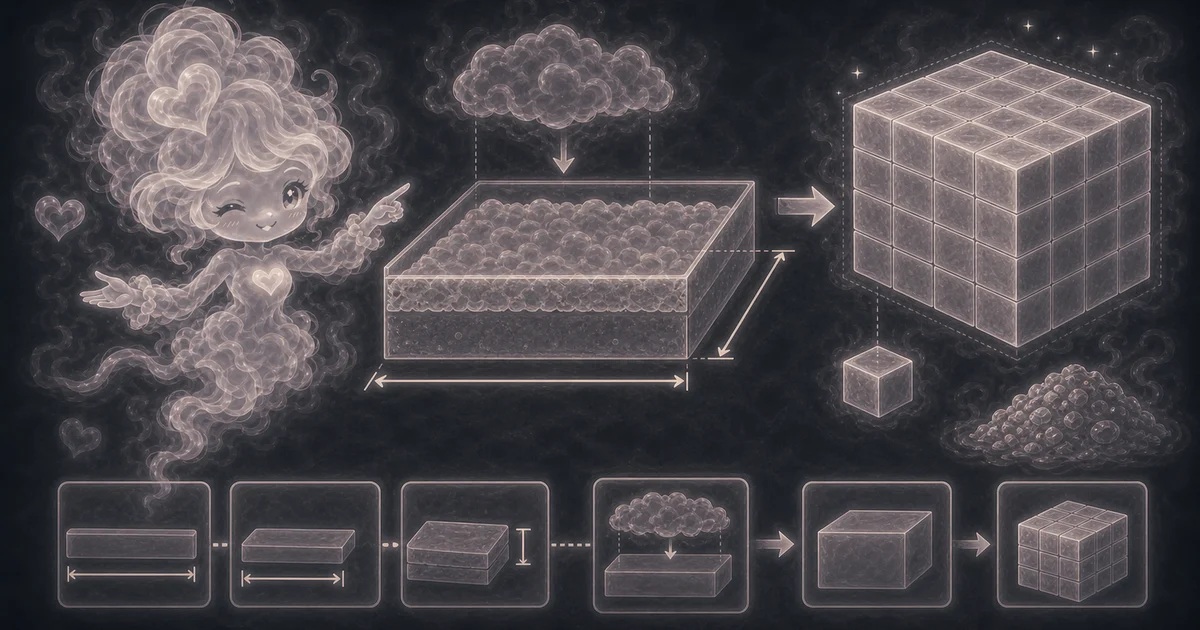
Estimate cubic yards for fill, soil, mulch, sand, or gravel.
Convert a shallow depth in inches into cubic yards.
Add waste before ordering bulk material.
Check the math behind material calculators.
Compare loose-yard bulk delivery with bagged material.
52.5 ft3 and 1.94 yd3
52.8 ft3 and 1.96 yd3
4 ft3 and 0.15 yd3
32 ft3 and 1.19 yd3
Need a slower walkthrough, a related calculator, or the full library? These links keep you close to the task you started.
Plain-language answers about when to use the tool, what it does with your inputs, what to double-check, and how privacy works.
Use it when your task matches one of these common needs: Estimate cubic yards for fill, soil, mulch, sand, or gravel. Convert a shallow depth in inches into cubic yards. It works best when you already know length, width, depth in inches, and waste percent.
In plain language: The calculator uses cubic feet = length x width x (depth inches / 12), adjusted cubic feet = cubic feet x (1 + waste percent / 100), cubic yards = adjusted cubic feet / 27, and cubic meters = adjusted cubic feet x 0.0283168. The examples on the page are there so you can compare your inputs with a cubic yard material example before copying the answer.
Length and width: the rectangular area to fill or cover. Depth: the average material depth in inches. Waste percent: extra material for uneven grade, compaction, settling, and ordering cushion.
Read the headline estimate first, then check the material, waste, coverage, and unit lines. For project tools, the supporting lines are often the difference between a rough idea and a list you can actually shop from.
This is a simple rectangular-volume estimate, not a supplier order guarantee. Uneven ground, compaction, slopes, forms, settling, moisture, truck minimums, bag yield, and supplier rounding can change what you buy. Also check whether your supplier sells loose cubic yards, compacted cubic yards, tons, bags, or a minimum delivery amount.
There are 27 cubic feet in one cubic yard because 1 yard is 3 feet, and 3 x 3 x 3 = 27. That is why the calculator divides adjusted cubic feet by 27.
Multiply length by width by depth in feet to get cubic feet, then divide by 27. If your depth is in inches, divide it by 12 first. For example, 3 inches is 0.25 foot.
A 20 ft by 10 ft area at 3 inches deep is 50 cubic feet before waste. With 5% waste, it becomes 52.5 cubic feet, or about 1.94 cubic yards.
Usually yes, but do it based on the supplier rules. Some sellers round to the nearest half yard, some have a one-yard minimum, and some sell bags or tons instead of loose cubic yards.
Only when you know the material density. A cubic yard of loose mulch, wet sand, gravel, and concrete can weigh very different amounts, so use the supplier tons-per-yard number when weight matters.
No. The calculator runs in your browser tab. Your recent answers stay only on the page while you use it, and they are not sent to a server.