Quick start
- Enter the concrete volume in cubic yards.
- Enter the cement, sand, and gravel ratio parts, such as 1, 2, and 3 for a 1:2:3 mix or 1, 2, and 4 for a 1:2:4 mix.
- Enter the cement bag cubic-foot yield from the bag or supplier label, then add waste for spills, uneven measuring, and low spots.
Best uses
Start here if one of these sounds like your job. The examples below show which inputs matter most.
- Plan cement, sand, and gravel for small concrete batches.
- Compare 1:2:3 and 1:2:4 style ratios.
- Add waste before buying bagged materials.
- Turn cubic yards into cubic feet, whole cement bags, sand, and gravel.
What this calculator is solving
The Concrete Mix Calculator helps plan small batches by splitting an adjusted concrete volume into cement, sand, and gravel parts. It is useful when you know the volume and need a rough buying list before checking the bag label or project instructions.
Match each input label on the calculator to the real measurement, amount, rate, unit, or setting for your job.
The formula in plain language
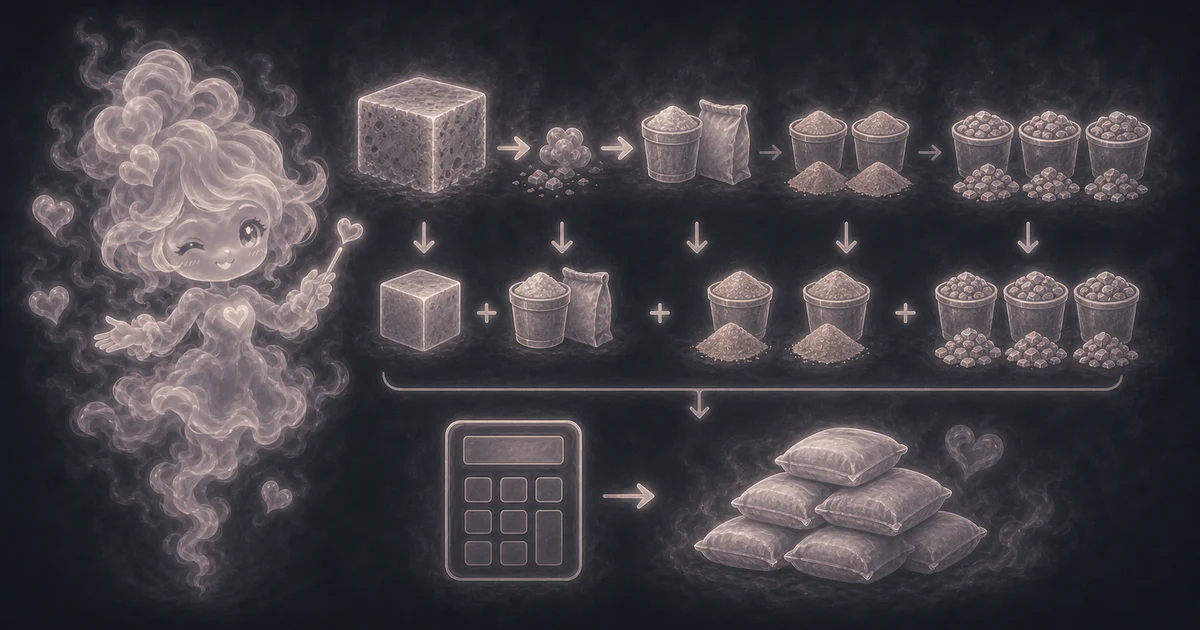
In plain language: The calculator converts cubic yards to cubic feet, adds waste, adds the cement, sand, and gravel parts, then gives each material its share of the adjusted volume. Cement bags are rounded up from the cement cubic feet and the bag yield you enter. The examples on the page are there so you can compare your inputs with a worked example before copying the answer.
The example cards on the calculator page show a complete set of inputs and the kind of answer you should expect.
How to read the answer
Read the main result first. Then check the smaller lines for the totals, units, ranges, counts, or formula steps behind it.
- Cement bags are rounded up from the cement cubic feet and bag yield you entered.
- Sand and gravel are shown in cubic feet so you can compare the material amounts before buying.
- Adjusted concrete volume includes the waste percent before the ratio split.
Common mistakes to avoid
If the answer looks strange, the most likely cause is a small input mismatch: a mixed unit, copied value, wrong mode, missing label, or result used for the wrong job.
- Do not use a rough ratio as a guaranteed strength mix.
- Do not forget water, aggregate moisture, curing, additives, slab thickness, base prep, joints, and product instructions.
- Do not use this for structural concrete unless the mix is specified by a qualified source.
- Do not treat this as a mortar-only sand and cement calculator. The live calculator needs cement, sand, and gravel parts.
What the ratio parts mean
A ratio like 1:2:3 does not mean one bag, two bags, and three bags automatically. It means one volume part cement, two volume parts sand, and three volume parts gravel.
The calculator adds all parts together, then gives each material its share of the adjusted concrete volume.
A quick 1:2:3 example
For 1 cubic yard with 10% waste, the adjusted volume is 29.70 cubic feet. A 1:2:3 mix has 6 total parts, so cement gets 4.95 cubic feet, sand gets 9.90 cubic feet, and gravel gets 14.85 cubic feet.
If your cement bag yield is 1 cubic foot, that cement amount rounds up to 5 bags. If the bag yield is smaller, the bag count goes up.
When to stop and check the product label
QUIKRETE notes that bag estimates are approximate and are rounded up for buying. That is the same practical idea here: round up, then check the exact product yield before you load the cart.
For slabs, footings, posts, or anything structural, use this as a planning check only. Mix design, water amount, reinforcement, curing, and local rules matter more than a simple ratio split.
Research and references
These references help check the measurements, units, limits, or safety notes used in this guide.
Worked examples for Concrete Mix Calculator
5 cement bags, 9.90 ft3 sand, 14.85 ft3 gravel
2 cement bags, 2.08 ft3 sand, 4.17 ft3 gravel
28.35 ft3 vs 29.70 ft3 adjusted concrete
7 cement bags
FAQ in plain language
When should I use the Concrete Mix Calculator?
Use it when your task matches one of these common needs: Plan cement, sand, and gravel for small concrete batches. Compare 1:2:3 and 1:2:4 style ratios. It works best when you already know the measurements, amounts, units, or options the page asks for.
What is the Concrete Mix Calculator doing with my inputs?
In plain language: The calculator converts cubic yards to cubic feet, adds waste, adds the cement, sand, and gravel parts, then gives each material its share of the adjusted volume. Cement bags are rounded up from the cement cubic feet and the bag yield you enter. The examples on the page are there so you can compare your inputs with a worked example before copying the answer.
What do the main Concrete Mix Calculator inputs mean?
Concrete volume: the final amount of concrete you want to make before waste is added. Mix ratio: cement, sand, and gravel parts by volume, such as 1:2:3 or 1:2:4. Cement bag yield: how many cubic feet one cement bag contributes. Use the bag or supplier label when you have it. Waste percent: extra material for spills, uneven measuring, low spots, and small batch losses.
How should I read the Concrete Mix Calculator answer?
Read the headline estimate first, then check the material, waste, coverage, and unit lines. For project tools, the supporting lines are often the difference between a rough idea and a list you can actually shop from.
What should I double-check before trusting the answer?
Concrete strength depends on water, aggregate, cement type, moisture, additives, curing, placement, and code requirements. This is a rough material takeoff, not an engineered mix design or safety sign-off. Also check the unit, scale, mode, and result limit because small input changes can change the answer.
What does a 1:2:3 concrete mix mean?
It means 1 part cement, 2 parts sand, and 3 parts gravel by volume. The calculator uses those parts to split the total adjusted volume.
What does a 1:2:4 concrete mix mean?
It means 1 part cement, 2 parts sand, and 4 parts gravel by volume. It uses more gravel than a 1:2:3 mix, so check your project instructions before choosing it.
Related tools
- Concrete Driveway CalculatorEstimate driveway concrete yards, bag counts, and rough material-only cost.
- Concrete Footing CalculatorEstimate concrete volume and bag counts for straight rectangular footings.
- Concrete Steps CalculatorEstimate concrete yards and bag counts for solid steps with an optional landing.
- Post Hole Concrete CalculatorEstimate concrete bag counts for fence, deck, and mailbox post holes.
Keep exploring
If this guide is close but not exact, these links keep you near the same kind of problem.
- Home & ProjectsBrowse the full category for related tools that help with the same job.
- All free toolsSearch the complete Access Free Tools library by task, category, or tool name.
- All calculator and utility guidesFind more plain-language examples, formulas, mistakes, and result explanations.
- Free calculator resourcesStart here when you are not sure which calculator page fits.
Privacy and copying results
Recent answers stay visible only while you work in the current browser tab. They are not sent to a server.
Use Copy answer when you want to save the inputs and result in notes, homework, a message, or a project list. Check the units, labels, and limits before copying.