Quick start
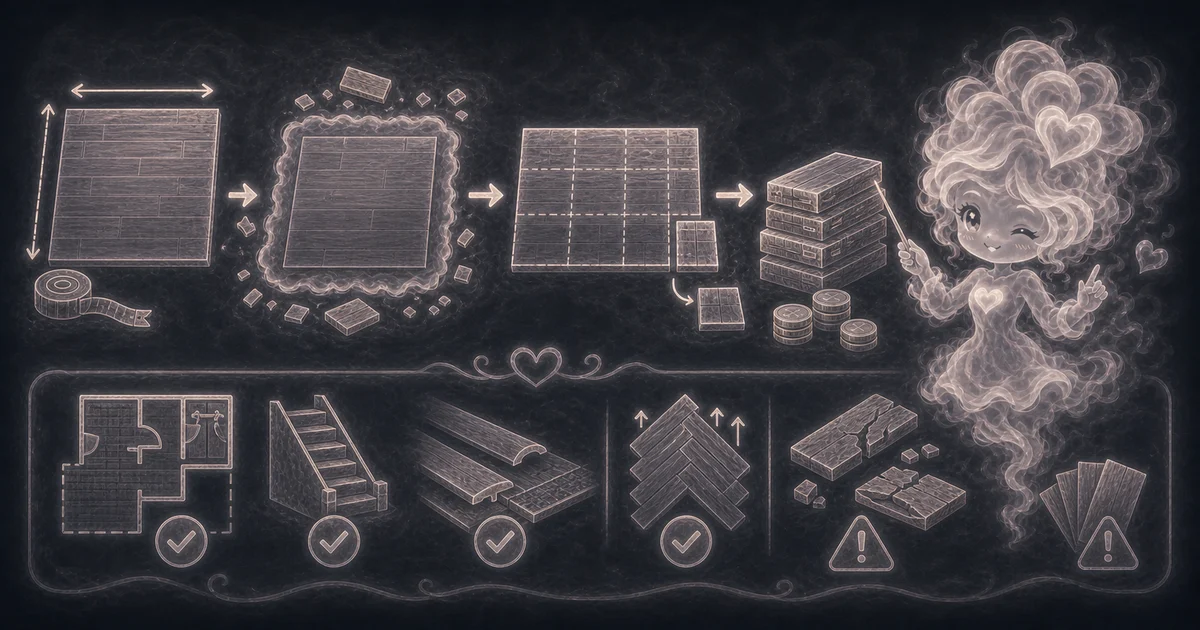
- Enter the measured floor area in square feet. Include closets, hallways, and connected areas if they will use the same flooring.
- Enter the waste percent you want for cuts, damaged planks, layout direction, and future repairs.
- Enter the square feet covered by one box or carton from the product label.
- Add price per box only when you want a rough product cost before tax, delivery, underlayment, trim, tools, or labor.
Best uses
Start here if one of these sounds like your job. The examples below show which inputs matter most.
- Estimate laminate, vinyl plank, engineered wood, or boxed flooring.
- Add waste before buying boxes.
- Compare product box coverage values.
- Estimate material cost when you know price per box.
What this calculator is solving
The Flooring Calculator estimates how many flooring boxes to buy before a store trip. It works best for laminate, vinyl plank, LVP, engineered wood, and other products where the carton tells you square feet per box.
Match each input label on the calculator to the real measurement, amount, rate, unit, or setting for your job.
The formula in plain language
In plain language: The calculator uses adjusted area = floor area x (1 + waste percent / 100), then boxes = ceiling(adjusted area / square feet per box). If price per box is entered, it multiplies whole boxes by that price. The examples on the page are there so you can compare your inputs with a worked example before copying the answer.
The example cards on the calculator page show a complete set of inputs and the kind of answer you should expect.
How to read the answer
Read the main result first. Then check the smaller lines for the totals, units, ranges, counts, or formula steps behind it.
- Boxes needed is rounded up because flooring is normally bought by whole boxes.
- Area with waste shows the measured square footage after your overage allowance.
- Coverage ordered shows how much square footage the rounded-up boxes cover, so you can see the spare amount.
- Estimated cost is only the box count multiplied by price per box.
Common mistakes to avoid
If the answer looks strange, the most likely cause is a small input mismatch: a mixed unit, copied value, wrong mode, missing label, or result used for the wrong job.
- Do not type the size of one plank when the input asks for square feet per box.
- Do not leave out closets, hallways, stair landings, or connected areas that need the same material.
- Do not use a tiny waste percent for diagonal, herringbone, damaged-board, or DIY-heavy layouts.
- Buy the main order together when possible so shade, finish, and dye lot differences are less likely.
Example: 240 square foot living room
Say the room is 240 square feet, the waste percent is 10%, each box covers 24 square feet, and each box costs $48. The calculator first plans for 264 square feet because 240 x 1.10 = 264.
Then it divides 264 by 24. That equals exactly 11 boxes. At $48 per box, the rough material cost is $528 before tax, delivery, underlayment, trim, tools, or labor.
What waste percent really does
Waste percent is not a trick to make the project look bigger. It is the extra material for cuts, bad boards, pattern direction, stair pieces, mistakes, and repair pieces.
A simple straight layout may only need a small buffer. Diagonal or patterned layouts usually need more because more boards get cut at angles. Product instructions and installer advice should beat any default number.
What the calculator leaves out
The result is a material estimate, not a full installation quote. It does not include subfloor repair, moisture testing, underlayment, stair noses, transition strips, adhesive, tax, delivery, returns, or installer labor.
If the product page says to buy extra cartons for future repairs, keep that in mind before returning every spare box. A later carton may not match the same shade or finish batch.
Why flooring waste and wallpaper waste feel similar
Flooring and wallpaper both ask for waste because real rooms do not use every piece perfectly. Flooring waste covers cuts, damaged boards, layout direction, and future repairs. Wallpaper waste covers trimming, pattern matching, corners, damaged strips, and dye lot safety.
The idea is similar, but the percentage is not automatically the same. A plain floor layout and a bold wallpaper pattern can need very different buffers, so use the material-specific calculator before buying.
Research and references
These references help check the measurements, units, limits, or safety notes used in this guide.
Worked examples for Flooring Calculator
11 boxes, 264 ft2 ordered, about $528
6 boxes, 135 ft2 ordered
48 boxes, 960 ft2 ordered
FAQ in plain language
When should I use the Flooring Calculator?
Use it when your task matches one of these common needs: Estimate laminate, vinyl plank, engineered wood, or boxed flooring. Add waste before buying boxes. It works best when you already know the measurements, amounts, units, or options the page asks for.
What is the Flooring Calculator doing with my inputs?
In plain language: The calculator uses adjusted area = floor area x (1 + waste percent / 100), then boxes = ceiling(adjusted area / square feet per box). If price per box is entered, it multiplies whole boxes by that price. The examples on the page are there so you can compare your inputs with a worked example before copying the answer.
What do the main Flooring Calculator inputs mean?
Floor area: the measured square footage for every room, closet, hallway, or connected area that gets the same flooring. Waste percent: extra flooring for cuts, damaged planks, pattern direction, mistakes, and future repairs. Box coverage: how many square feet one box covers according to the product label. Price per box: an optional material price used only when you want an estimated product cost.
How should I read the Flooring Calculator answer?
Read the headline estimate first, then check the material, waste, coverage, and unit lines. For project tools, the supporting lines are often the difference between a rough idea and a list you can actually shop from.
What should I double-check before trusting the answer?
Flooring orders depend on room shape, product layout, diagonal or herringbone patterns, stairs, closets, transitions, damaged pieces, underlayment, trim, installer layout, returns, and matching dye lots. Also check the unit, scale, mode, and result limit because small input changes can change the answer.
How much waste should I add for flooring?
For a simple straight layout, 5% to 10% is a common starting point. Use more when the room has many cuts, closets, stairs, diagonal layout, herringbone layout, fragile boards, or if you want spare pieces for repairs. The product label or installer should win if they give a specific overage.
Why does the Flooring Calculator round boxes up?
Flooring is bought in whole boxes. If the math says 10.2 boxes, you still need 11 boxes because stores will not sell 0.2 of a box for most plank or laminate products. Rounding up also helps cover small measuring mistakes.
Related tools
- Wallpaper CalculatorFigure out how many wallpaper rolls to buy, plus rough material cost when you add a roll price.
- Area CalculatorCalculate flat-shape area for rectangles, triangles, circles, trapezoids, and parallelograms.
- Carpet CalculatorEstimate carpet square yards, adjusted area, and roll length from room size, roll width, and waste.
- Paint CalculatorEstimate interior wall paint gallons from room size, openings, coats, coverage, and extra percent.
Keep exploring
If this guide is close but not exact, these links keep you near the same kind of problem.
- Home & ProjectsBrowse the full category for related tools that help with the same job.
- All free toolsSearch the complete Access Free Tools library by task, category, or tool name.
- All calculator and utility guidesFind more plain-language examples, formulas, mistakes, and result explanations.
- Free calculator resourcesStart here when you are not sure which calculator page fits.
Privacy and copying results
Recent answers stay visible only while you work in the current browser tab. They are not sent to a server.
Use Copy answer when you want to save the inputs and result in notes, homework, a message, or a project list. Check the units, labels, and limits before copying.